




General information
Responsibility
The evaluation officer is responsible for preparing and amending this document. The occupational safety specialists at the Marktl and St. Pölten sites are responsible for revisions to the content.
Purpose and Objective
This process description sets out the safety rules applicable to all employees and the occupational safety organisation.
Terms Used
PPE: Personal Protective Equipment
General Safety Rules / Marktl and St. Pölten Sites
Introduction
Occupational safety, health and environmental protection are objectives addressed to all employees
- of PREFA Aluminiumprodukte GmbH at the Marktl site
- of PREFA Aluminiumprodukte GmbH at the St. Pölten site
- of external companies
- of companies that provide us with temporary staff (temporary agency personnel).
We expect everyone to act responsibly in matters of safety, health and environmental protection. Managers are required to establish the conditions necessary for such responsible conduct and to serve as role models for employees.
Before commencing work for the first time, employees must, in addition to receiving these “General Safety Rules,” be instructed on workplace-specific hazards (Health Protection Document) and undergo any required fitness-for-work examinations. As a general rule, employees may only carry out work for which they have been trained and properly instructed.
Employees' Whereabouts
Employees must remain at their workplace and within their organisational unit unless otherwise specified in their job descriptions. The immediate supervisor must be notified in advance before an employee leaves the work area. Entering operational areas without authorisation is prohibited.
Medical Fitness
The supervisor must arrange the mandatory examinations specified in the applicable safety and health protection documents. The occupational health physician conducts the fitness-for-work examinations for workplaces involving exposure to dust, heat and noise.
Employees who are physically or mentally impaired (due to illness, alcohol, drugs or medication) must not commence or continue their work.
The consumption of alcoholic beverages during working hours and breaks is prohibited!
Workplace Hazards
As there is a risk of burns and cuts in all production areas, all products and production equipment must be handled with the necessary care and with the prescribed Personal Protective Equipment.
Never reach into moving machine parts.
Hair that is long enough to be tied back must be tied back when working on machines with rotating parts.
As a general rule, when working with rotating machinery, ties, loose sleeves, scarves or any other items worn on the body that could become caught are prohibited.
Removing or bypassing safety devices (e.g. light barriers, fences, limit switches, etc.) is prohibited.
Order and Cleanliness in the Workplace
Orderliness is an essential basis for workplace safety. Every employee is required to return work equipment to its designated place after use. Work equipment and various aids that are no longer needed must not be left lying around. Waste must be disposed of by the person who generated it in an environmentally responsible manner using the waste containers provided.
Sealed and packaged food and beverages must be stored and kept in the designated locations. (refrigerators, break rooms, designated storage areas, etc.). For hygiene reasons, open food must not be stored for extended periods, not even in designated areas.
Regardless of the presence of hazardous substances, food and beverages must not be left unattended outside the designated storage locations (refrigerators, break rooms, designated storage areas, etc.).
Before eating, drinking or smoking, hands must be washed and PPE (especially gloves) must be removed to prevent contaminants from being ingested. After eating, hands must be cleaned again to prevent contamination of work equipment and products. After cleaning their hands, employees must put on and use the PPE required for the respective activity again in accordance with the regulations.
When leaving the workplace, care must be taken to maintain due order and cleanliness. This means that working substances and containers must be returned to their designated storage locations.
Personal Protective Equipment (PPE)
The Personal Protective Equipment (PPE) specified for the respective task or work area is listed in the Health Protection Documents, operating instructions, posted safety notices or work instructions. This information may also be obtained from the direct supervisor. Employees are responsible for the condition and cleaning of the protective equipment issued to them. Equipment impaired by wear and tear must be replaced. The direct supervisor must be informed of this.
The following is a list of possible injuries and how they can be prevented.
Injury/Hazard – Signage – Protective Equipment

Foot injury -> Safety footwear
Unless special rules apply, at least S1 safety footwear is mandatory in production areas. At least sturdy footwear is required in walkway areas.

Hand injury -> Assembly gloves
or cut-resistant gloves

Eye injury -> Safety glasses

Head injury -> Safety helmet or bump cap

Noise-induced hearing loss -> Hearing protection
(mandatory in all marked areas and at noise levels > 85 dB)

Burns -> Face protection
and suitable work clothing, heat-resistant gloves (welding)
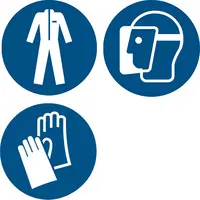
Chemical burns -> Protective clothing in accordance with
material safety data sheets or operating instructions, face protection, gloves
Empty hearing protection dispensers, glove dispensers, etc. must be reported to the supervisor immediately.
Traffic Routes and Walkways
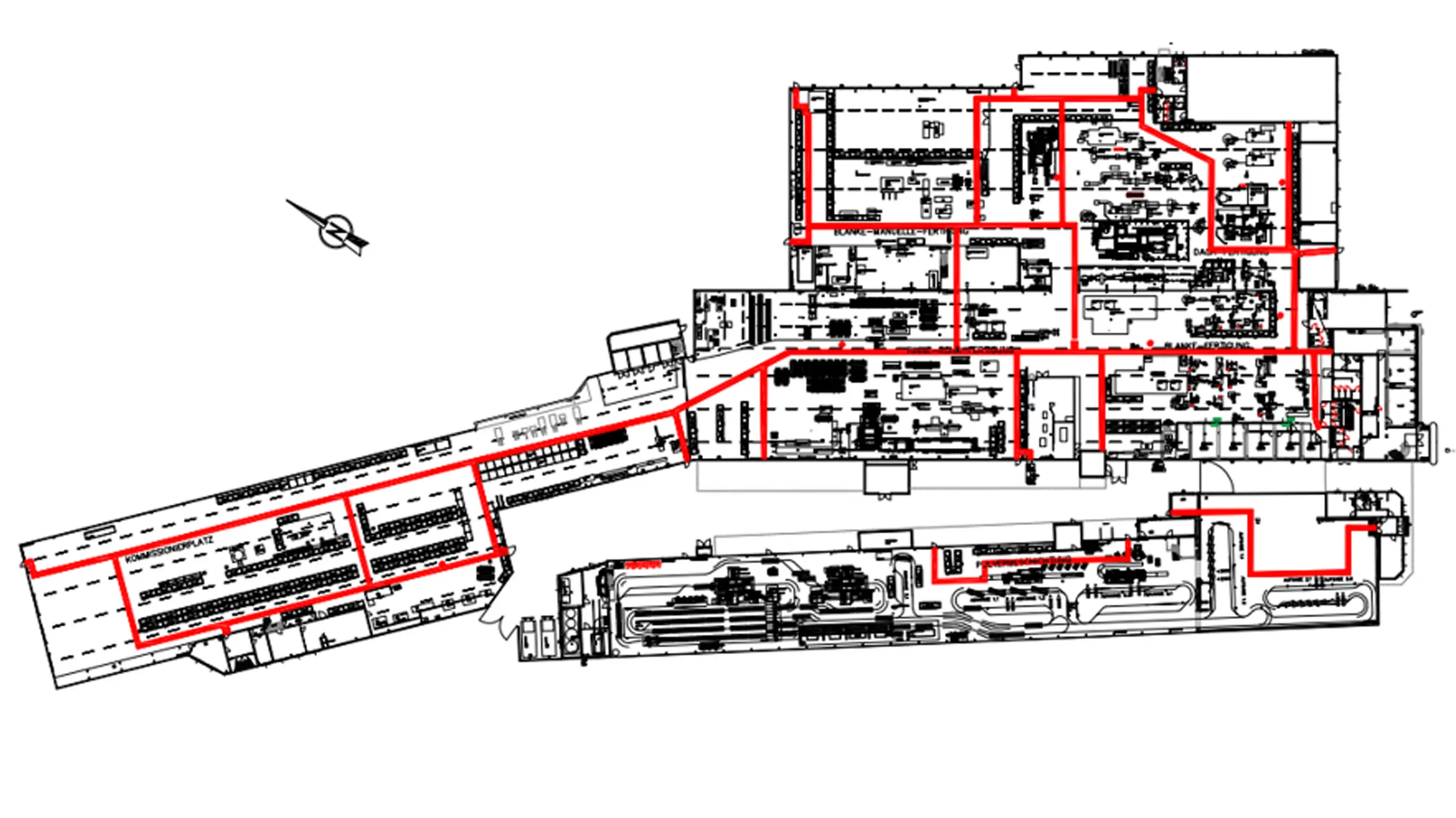
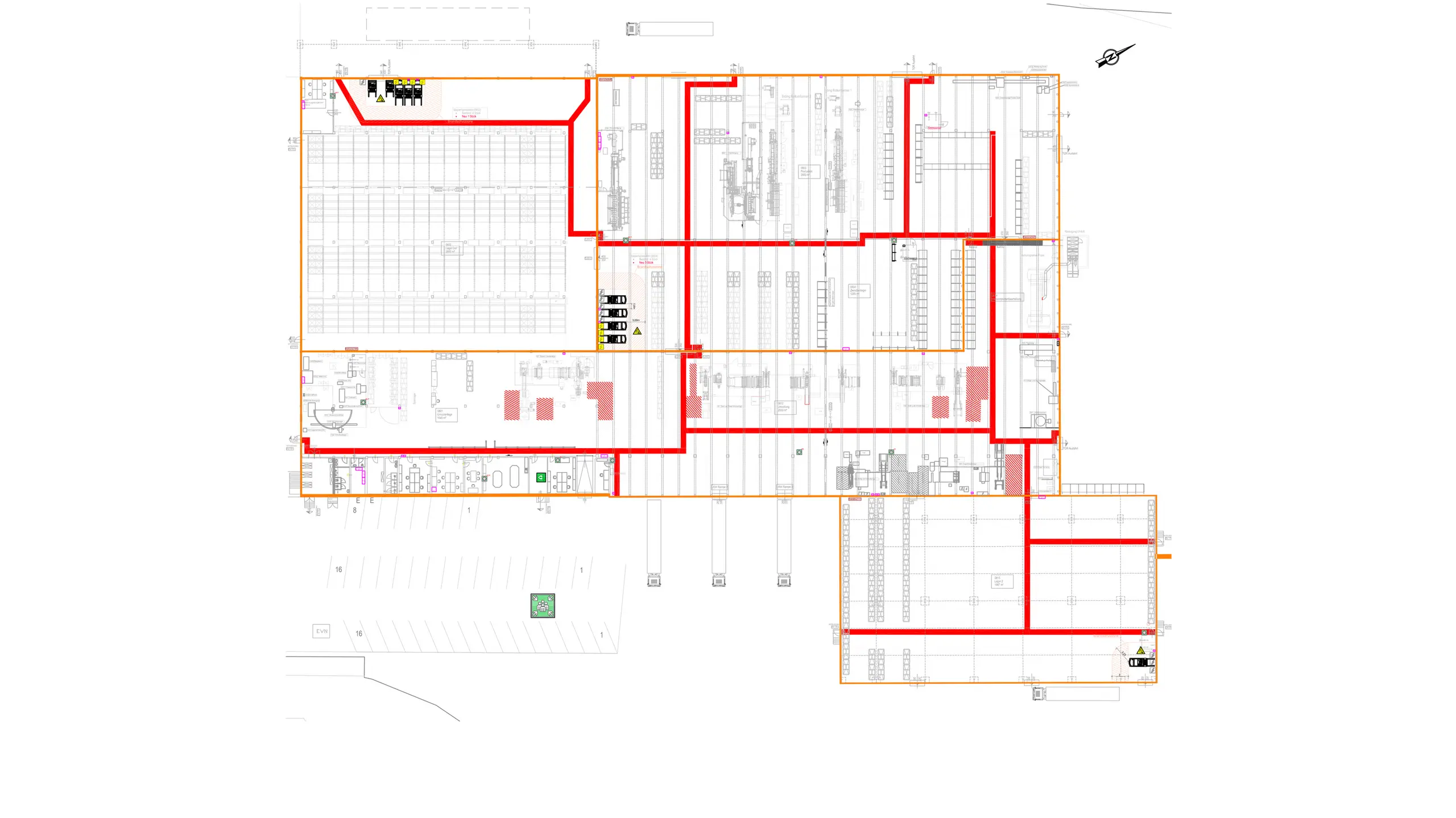
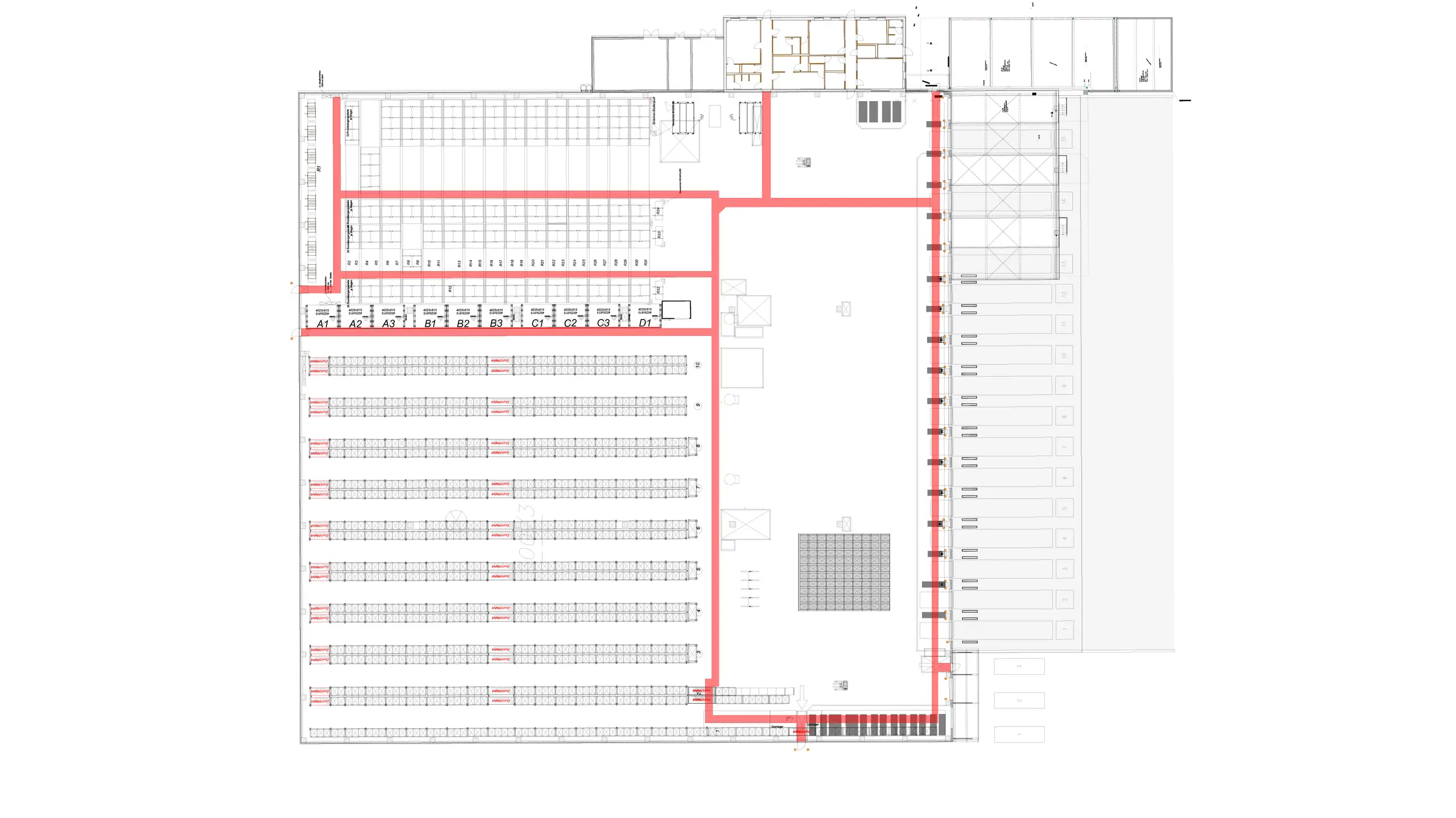
Traffic and transport routes as well as restricted areas must be kept clear. Crossing roller conveyors and conveyor systems anywhere other than at designated safe crossings is prohibited. The maximum speed on the plant premises is 10 km/h or walking speed (as indicated by signs). The Road Traffic Regulations (StVO) shall apply throughout the plant premises. Private cars may only be parked in the designated parking spaces.
Employees moving within production areas outside the designated red walkways & escape routes are required to wear safety footwear. Sturdy, closed-toe footwear must be worn on the designated routes.
External persons, training participants or customers must use only the designated marked red walkway & escape route. Sturdy, closed-toe footwear must be worn there. The walkway must not be left without approved safety footwear. The responsible PREFA employee is responsible for compliance with the applicable requirements.
- The designated escape routes must allow for the workplace to be evacuated quickly in the event of danger.
- Traffic routes are intended for normal pedestrian traffic within a workplace and may also be used by industrial trucks.
- All exits along escape routes are emergency exits.
Warning Devices, Safety Signage
The following emergency and fire safety signs can be found on the premises:
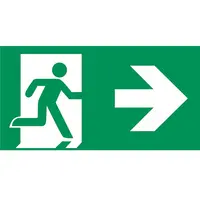
Escape Route

Eyewash Station
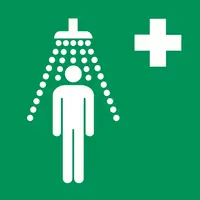
Emergency Shower

First Aid

Defibrillator (AED)
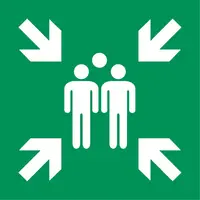
Assembly Point

Fire Hose Reel/Fire Hose
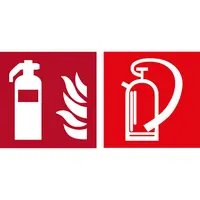
Fire Extinguisher
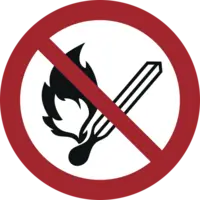
No Fire, Open Flames or Smoking
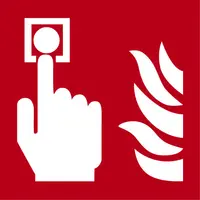
Fire Alarm
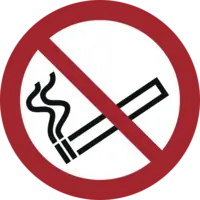
No Smoking
Sit-Down Forklift Trucks
Sit-down forklift trucks may only be operated by trained and authorised persons. This means that the person concerned must hold a forklift operator’s license and must have been issued an internal driving permit.
When leaving the forklift truck, the forks must be lowered and the ignition key removed.
Any seat belts or safety doors provided must be used.
Phone calls while driving are permitted only with a headset or hands-free system (as stipulated by the StVO). If no such equipment is available, the vehicle must be stopped for the duration of the call.
Persons may only be lifted in a work platform and after appropriate instruction has been provided.
Pedestrian-Controlled Forklift Trucks
Pedestrian-controlled forklift trucks may only be operated by physically and mentally fit persons who are at least 18 years old.
Pedestrian Pallet Trucks
Riding or carrying passengers on pedestrian pallet trucks is prohibited!
Cranes
Cranes with a load capacity of more than 50 kN (5 t) may only be operated by properly instructed or trained employees.
Riding on the load or lifting accessory is prohibited. Before lifting, check that the load is properly secured.
Standing under suspended loads is prohibited.
Ladders
Ladders must be inspected for obvious defects before each use. Particular attention must be paid to ensuring that all ladder safety feet are present. The stiles and rungs must not be bent or damaged. Damaged ladders must not be used and must be reported to the relevant supervisor.
Ladders must be secured against slipping (e.g. by a second person) and sinking, and must be set up on level ground. Only short-duration work within easy reach may be carried out from ladders. Ladders may only be set up in traffic areas if special safety measures are in place (e.g. a safety lookout).
Leaning ladders must be set up at an angle of between 65° and 75°, and the top four rungs must not be climbed. The ladder must extend at least 1 m beyond the access or exit point.
Scaffolding
Scaffolding must be erected and used in accordance with the manufacturer’s assembly instructions or the standard configuration. For scaffolding that is not erected and loaded in accordance with the standard configuration, structural calculations must be provided and kept available at the construction site for inspection by the authorities.
Scaffolding may only be erected, substantially modified or dismantled by suitable persons familiar with this work under expert supervision (e.g. site foreperson, site manager, etc.).
Scaffolding may only be erected on ground with sufficient load-bearing capacity.
Metal scaffolding must be grounded when located near electrical lines. Scaffolding in traffic areas must be clearly and visibly marked and protected against vehicle impact.
A scaffold hatch used for access must be closed again after passing through it.
Storage
The permissible and indicated rack load capacities must not be exceeded. When setting down equipment, products and loads of any kind, ensure that they are stable.
Climbing on racks is prohibited.
STORAGE PROHIBITIONS:
Emergency exits, traffic routes and walkways, stairwells, corridors, fire protection equipment (fire alarms, fire extinguishers, fire hose reels, etc.) and access points to electrical cabinets or plant rooms must be kept clear at all times.
Stairs
- Always pay attention when using stairs.
- Slow down before using the stairs: It is better to walk more slowly.
- Use the handrail; it provides additional stability and safety.
- Avoid tripping hazards: Do not store any items on the stairs.
Waste Disposal
DISPOSAL CONTAINERS must always be kept closed. Waste must be collected separately in the designated and labelled containers. Please observe the information on waste containers.
Safety Knives
To prevent workplace accidents, the safety knives provided must be used according to the relevant application.
Do not bring in any external knives onto the premises.

for cutting cardboard

For cutting open pallet wrapping and straps

automatic blade retraction can be used for various tasks
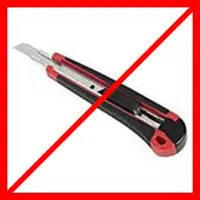
Do Not Use

Do Not Use
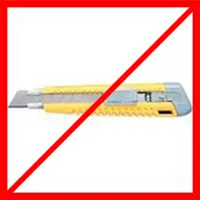
Do Not Use
Hazardous Substances
The safety measures for using hazardous substances such as cleaning agents, lubricants, paints, alkaline solutions, corrosive substances and similar materials are set out in operating instructions and material safety data sheets. These can be obtained from the supervisor for consultation.
All containers must be labelled with the substance name, markings and hazard statements in accordance with the GHS.
Special instruction is required for certain individual operating materials. This is provided in the form of accessible operating instructions and must be followed.
In areas where hazardous substances are present (as indicated by the labels on the original containers), STORING, EATING or DRINKING any type of food or beverage is prohibited!
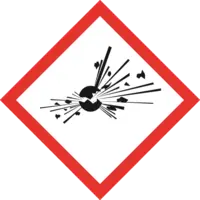
GHS01
Explosive
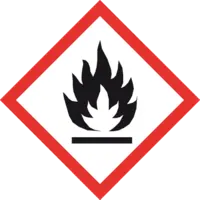
GHS02
Flammable
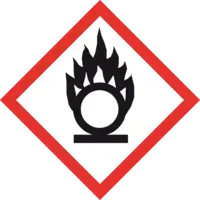
GHS03
Oxidising
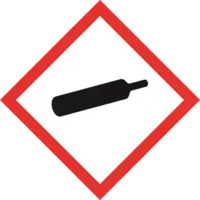
GHS04
Gas Under Pressure
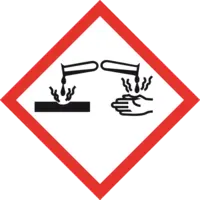
GHS05
Corrosive
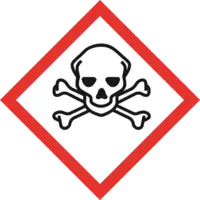
GHS06
Toxic
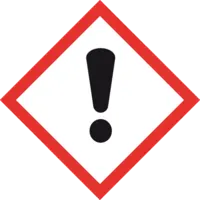
GHS07
Health Hazard
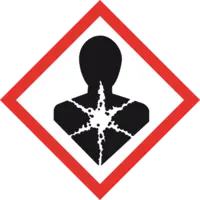
GHS08
Serious Health Hazard
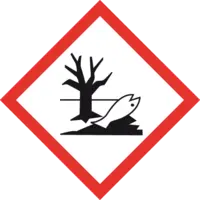
GHS09
Hazardous to the Environment
Potentially Explosive Atmospheres (Ex Zones)
No ignition sources may be present in Ex zones. Possible ignition sources include open flames, smoking and hot surfaces. It is therefore prohibited to bring electrical equipment (tools, lights, etc.) that is not explosion-protected into these zones. Electronic communication devices that are not explosion-protected must be switched off. Before carrying out hot work or work with equipment that is not explosion-protected, a permit must be issued by the fire safety officer.
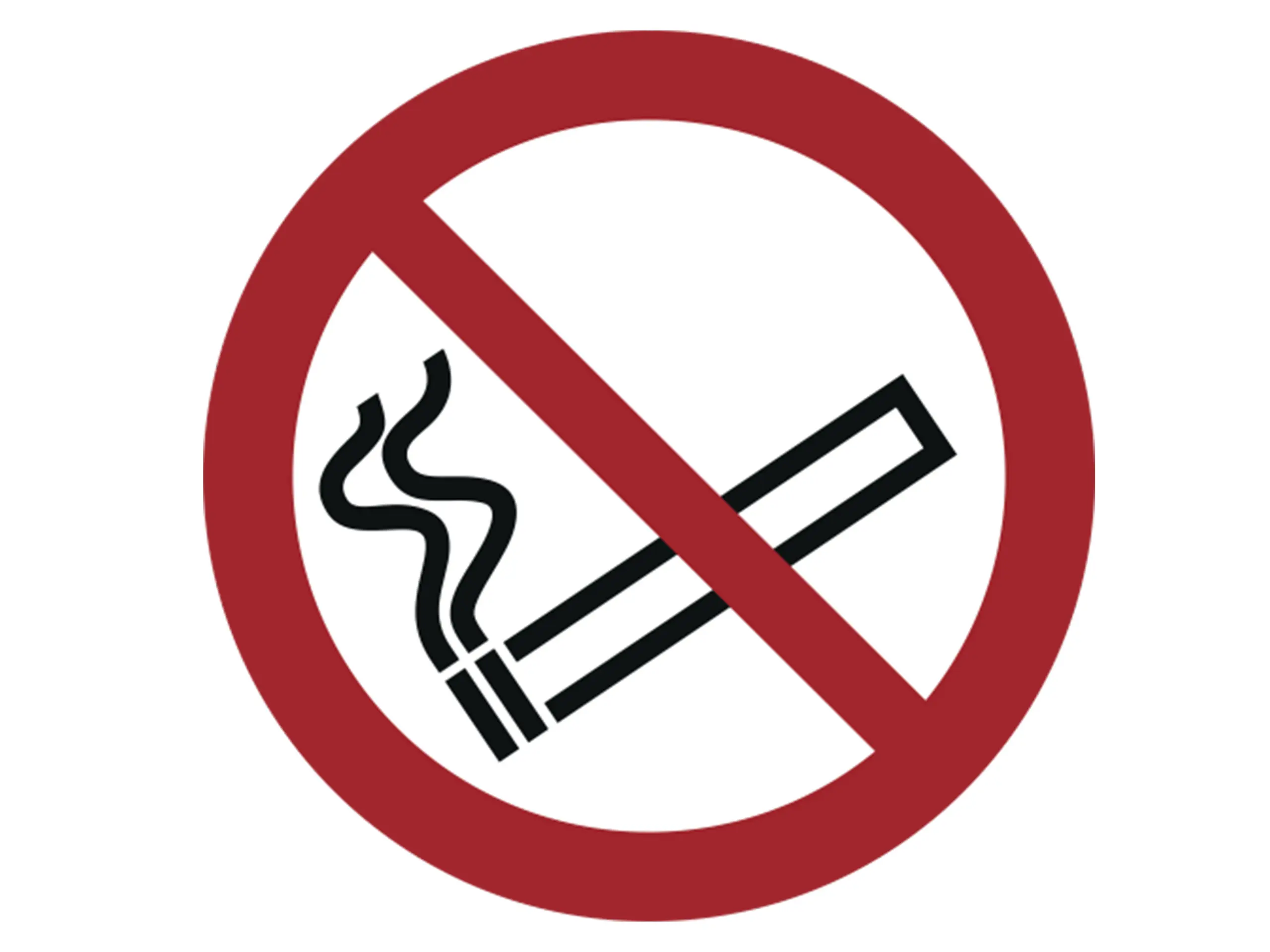
No Smoking
Smoking is strictly prohibited throughout the entire plant premises. This serves both to protect non-smokers in accordance with Section 30 of the Federal Law on Safety and Health at Work (ASchG) and to provide preventive fire protection. Smoking is permitted only in the designated and appropriately marked smoking areas. Smoking shelters equipped with self-extinguishing ashtrays have been provided for this purpose. The smoking areas are clearly identified by appropriate signage.
The designated smoking areas are regularly inspected, cleaned and maintained. The ashtrays are emptied at appropriate intervals to ensure cleanliness and safe operation and to minimise fire hazards.
For occupational safety and fire protection reasons, smoking outside the designated smoking areas is prohibited and will be penalised accordingly as a breach of company rules or a disciplinary offense. All employees and external persons are required to comply with the applicable rules and help maintain safe, clean company premises that comply with fire protection requirements.
SMOKING IS PROHIBITED THROUGHOUT THE ENTIRE PLANT!
Except in the designated smoking areas.
Employee Conduct When the Alarm Sounds (Siren)
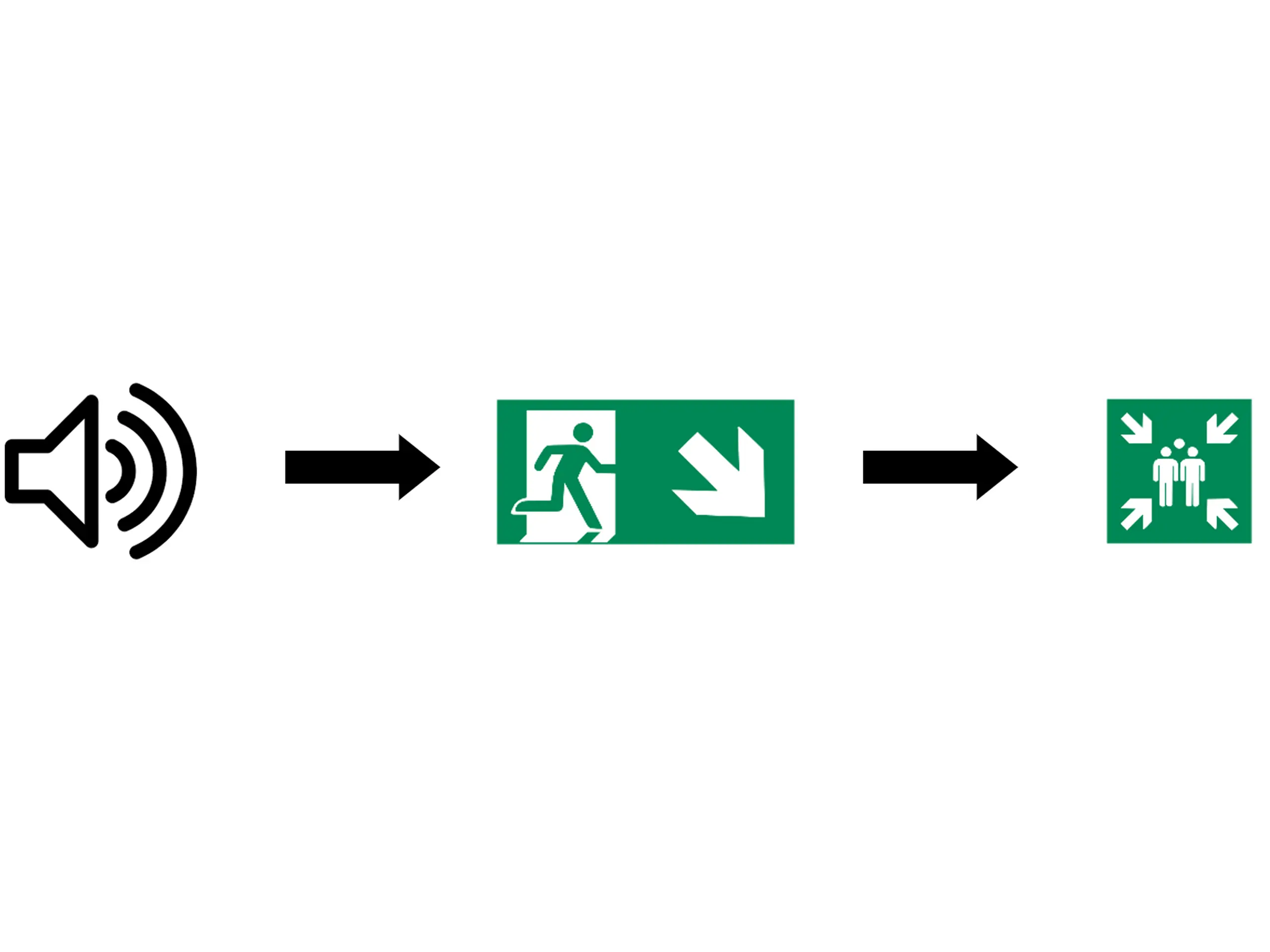
When the sirens sound, leave the building immediately via the nearest emergency exit and proceed to the assembly point.
At the assembly point, the department manager / shift supervisor must conduct a roll call and report the results to the fire safety officer.
Report missing persons to the firefighting team.
The work area may only be re-entered once clearance has been given by the fire department.
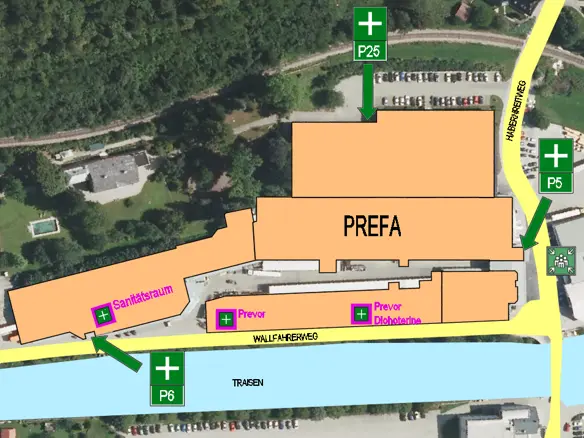
Marktl Assembly Point
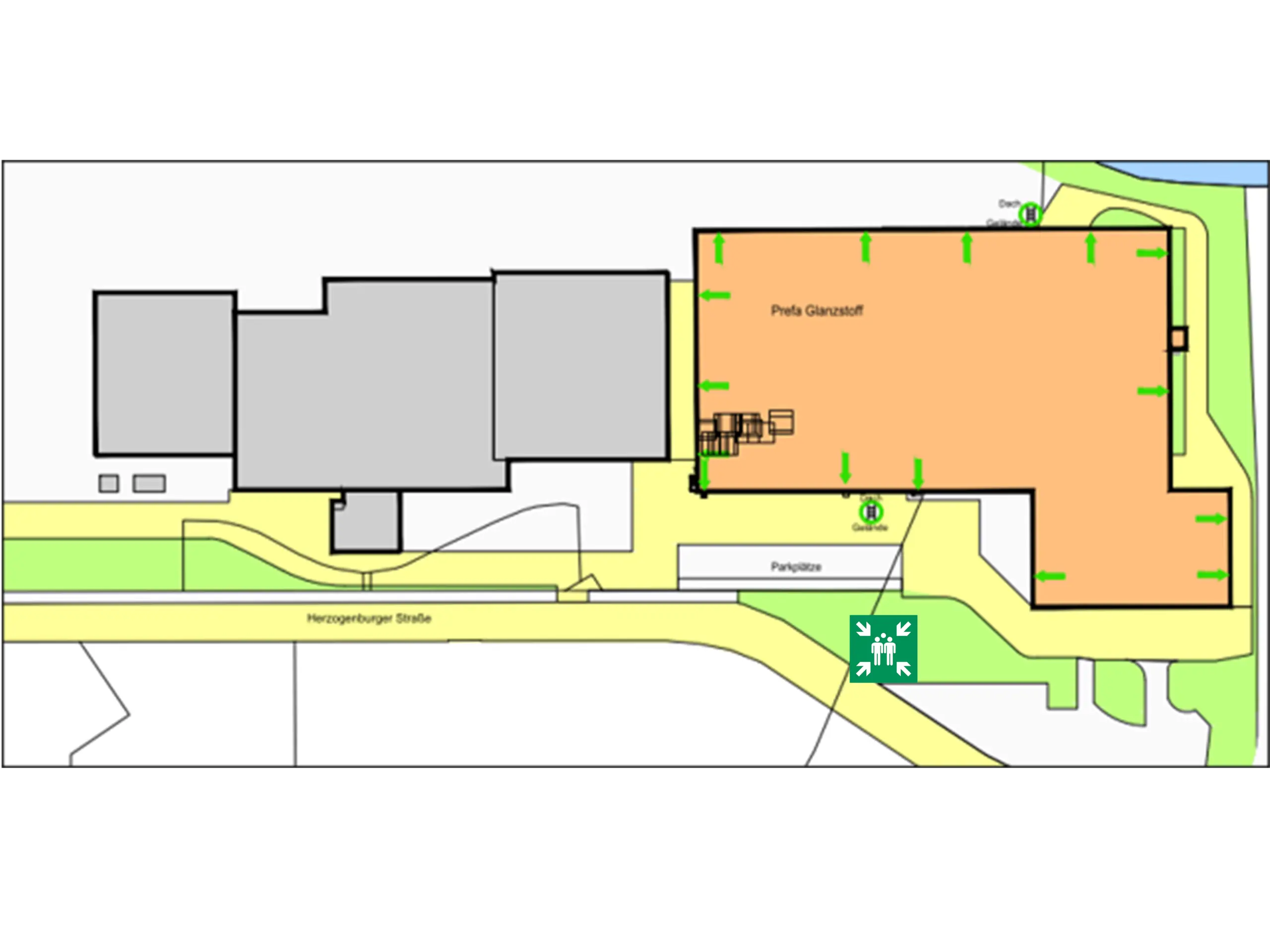
St. Pölten Assembly Point
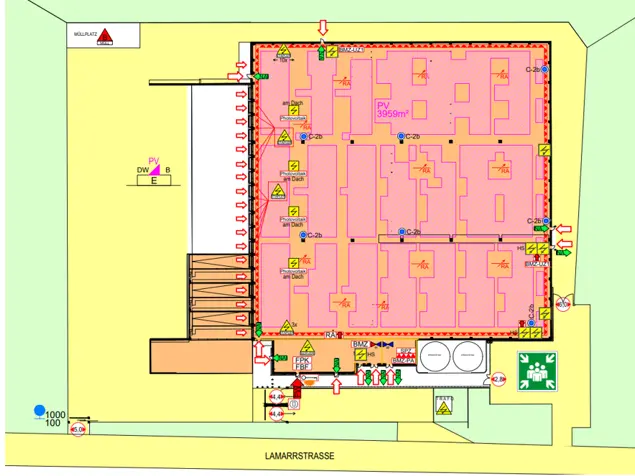
St. Georgen Assembly Point
Employee Conduct in the Event of an Accident
In the event of an accident, observe the following:
- Keep calm!
- Report the accident WHO should report it?
- WHAT happened?
- WHERE did it happen?
(Marktl: see Access Map_Rescue Assistance / P5, P6 or P25 / Habernreitweg 1 – 3180 Lilienfeld)
(St. Pölten: Herzogenburgerstraße 69 – 3100 St. Pölten) - HOW MANY people are injured?
- Are any other people in danger?
- First aid
- Secure the accident site
- Provide first aid to the injured (use a defibrillator if necessary)
- Follow instructions
- Do not leave the injured person alone
- Further Measures
- Direct the fire department and ambulance to the scene
- Keep bystanders away
When using the telephones available on the company premises, dial zero before the emergency number:
Emergency Services |
144 |
|---|---|
Fire Department |
122 |
Police |
133 |
Poison Control Centre |
**900 |
Unless already saved, the following emergency numbers apply to mobile phones. In addition, the European Emergency Number is available throughout the EU (as well as Switzerland, Norway and Iceland) without a SIM card, on any network and even when the keypad is locked.
European Emergency Number |
112 |
|---|---|
Emergency Services |
144 |
Fire Department |
122 |
Police |
133 |
Poison Control Centre |
01/4064343 |
Duties of Cooperation
Employees must immediately report every occupational accident, every incident that nearly resulted in an accident, every risk to health and safety they identify, and every defect identified in the protective systems to the responsible supervisors or other responsible persons (reporting card system).
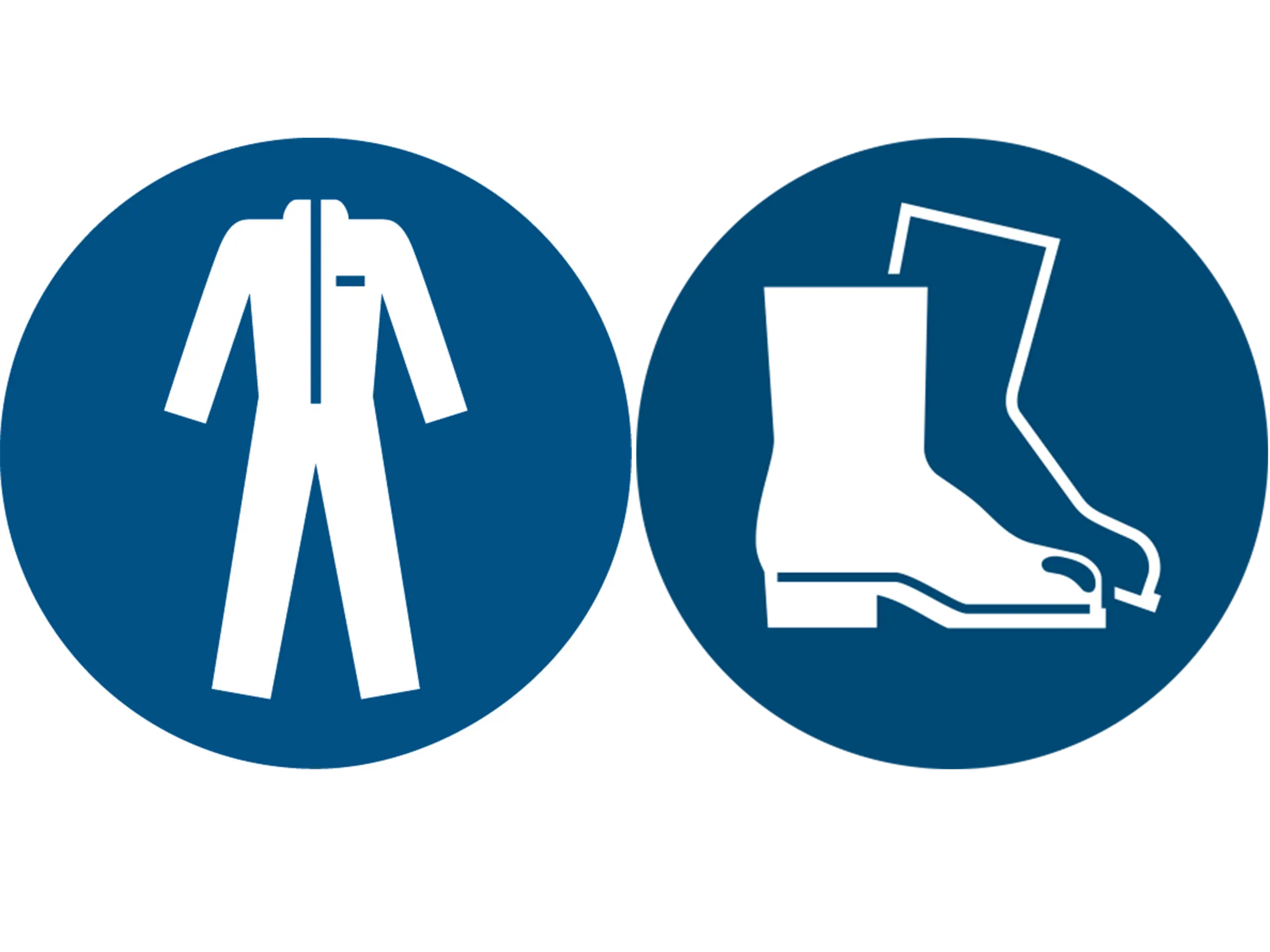
Workwear Throughout the Production Area
Tank tops and spaghetti-strap T-shirts are not permitted as workwear. All production employees must wear the workwear provided.
Registration and Deregistration of External Persons (Visitors)
For persons from outside the plant, the client or host must ensure that they register and deregister and receive safety instructions. Any changes in the number of persons working must also be reported.
Safety shoes must be worn outside the walkways. Sturdy footwear is required in walkway areas.
Visitors from outside the plant must be issued high-visibility visitor vests when touring the production area.
External Training at the PREFA-Academy
As part of our duty of care and protection, the respective training instructor must ensure that all training participants receive documented training on the hazards arising from handling the equipment to be used. Training participants must confirm receipt of the safety instructions on the attendance list.
Use of Machinery by External Companies
The external company or respective employee must receive documented training (training record) from the production supervisor or an authorised production representative.
Photography
Photography is permitted only after consulting the host. Flash photography is prohibited in the powder-coating area (as specified in the Ex Zone plan).
Cycling on Company Premises
Cycling in PREFA's production halls is permitted only for authorised persons who have been issued a cycling permit. Permits are issued by PGL or PPL.
The StVO must be observed in outdoor areas; in the production halls, “Forklift traffic and pedestrians have right of way.” Bicycles must be equipped in accordance with Section 65 of the StVO.
In the production halls, cycling is permitted only on designated traffic routes and at walking speed.
Disciplinary Violations
Immediate action must always be taken in the event of a disciplinary violation. A very serious disciplinary violation may also result in summary dismissal.
What is the difference between dismissal and termination with notice?
Termination with notice means terminating the employment relationship in compliance with the applicable notice periods. Employees who started before 2003 will receive severance pay under the old scheme as part of their final settlement.
Summary dismissal means immediate termination by the employer. Employees who started before 2003 lose their entitlement to severance pay.
The employer is no longer required to observe any notice periods because continuing the employment relationship cannot reasonably be expected of the employer.
What types of disciplinary violations exist?
- Breaches of duty / failure to comply with safety regulations/instructions
- Alcohol / addiction
- Gross insult / criminal threat
- Fighting / bodily injury
- Unauthorised absence / leaving the workplace
What must be done?
All the disciplinary violations listed above may result in summary dismissal. It is important to respond to the disciplinary violation immediately.
- I. Notify your supervisors (department manager/plant manager/managing director).
- II. If they are not present, call in a witness
- draw up a written record
- send the employee home
- inform your supervisors immediately at the next opportunity.
Important
If an employee has been suspended from work, only your supervisor can lift the suspension. If the suspension has not been lifted, you must under no circumstances allow the suspended employee to work.
Who issues a summary dismissal?
Every summary dismissal requires a thorough review of the facts (what happened?) and a legal review (is summary dismissal justified?). The facts and legal situation are reviewed by your supervisors together with the HR department.
What must be done if an employee is intoxicated or under the influence of drugs?
- Call in a witness
- Draw up a written record
- Call a taxi (Taxi Lilienfeld (Esche): 0664 /9213529, Taxi St. Veit (Klaus): 0664/4731089). For apprentices, involve their legal guardians and notify the works council.
- Send the employee home
- Accompany the employee to the taxi
- Inform your supervisors immediately
What must be done if an employee is intoxicated or under the influence of drugs?
Examples of breaches of duty include:
- Failure to comply with general company and safety regulations or work instructions
- Failure to wear personal protective equipment
- Arriving late
However, you may send the employee home only if they have already received 2 warnings or if, despite being instructed to stop, they persist in their misconduct!
Only a persistent breach of duty may result in summary dismissal. As a general rule, persistence is deemed to exist if the employee has already received 2 warnings for disciplinary violations or if, despite being instructed to stop, the employee persists in their misconduct.
Organisation
Occupational Safety Organisation
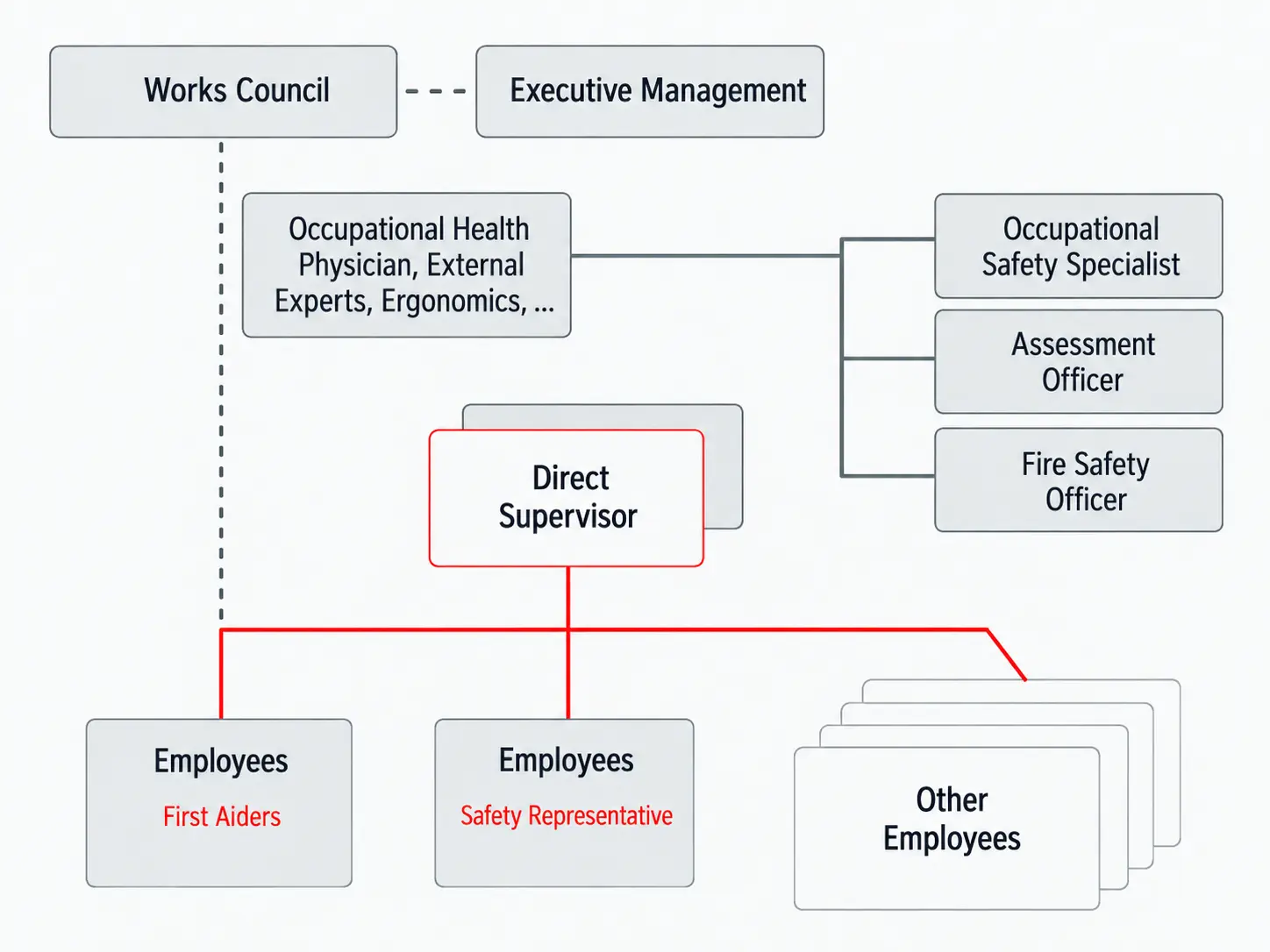
To protect life and health in the workplace, the employer must establish a suitable organisation, provide the necessary resources, and consult employees on all matters relating to safety and health.
The organisational structure for occupational safety is as follows:





Types of Accidents
Near Miss
An incident in which no one was injured. An accident almost occurred.
Minor Accident
A minor injury. Either no sick leave or no more than 3 days of sick leave
Workplace Accident
A moderate to severe injury. Sick leave lasting more than 3 days.
Commuting Accident
An accident that occurs while travelling from home to the company (or vice versa).
Company Accident Reporting System
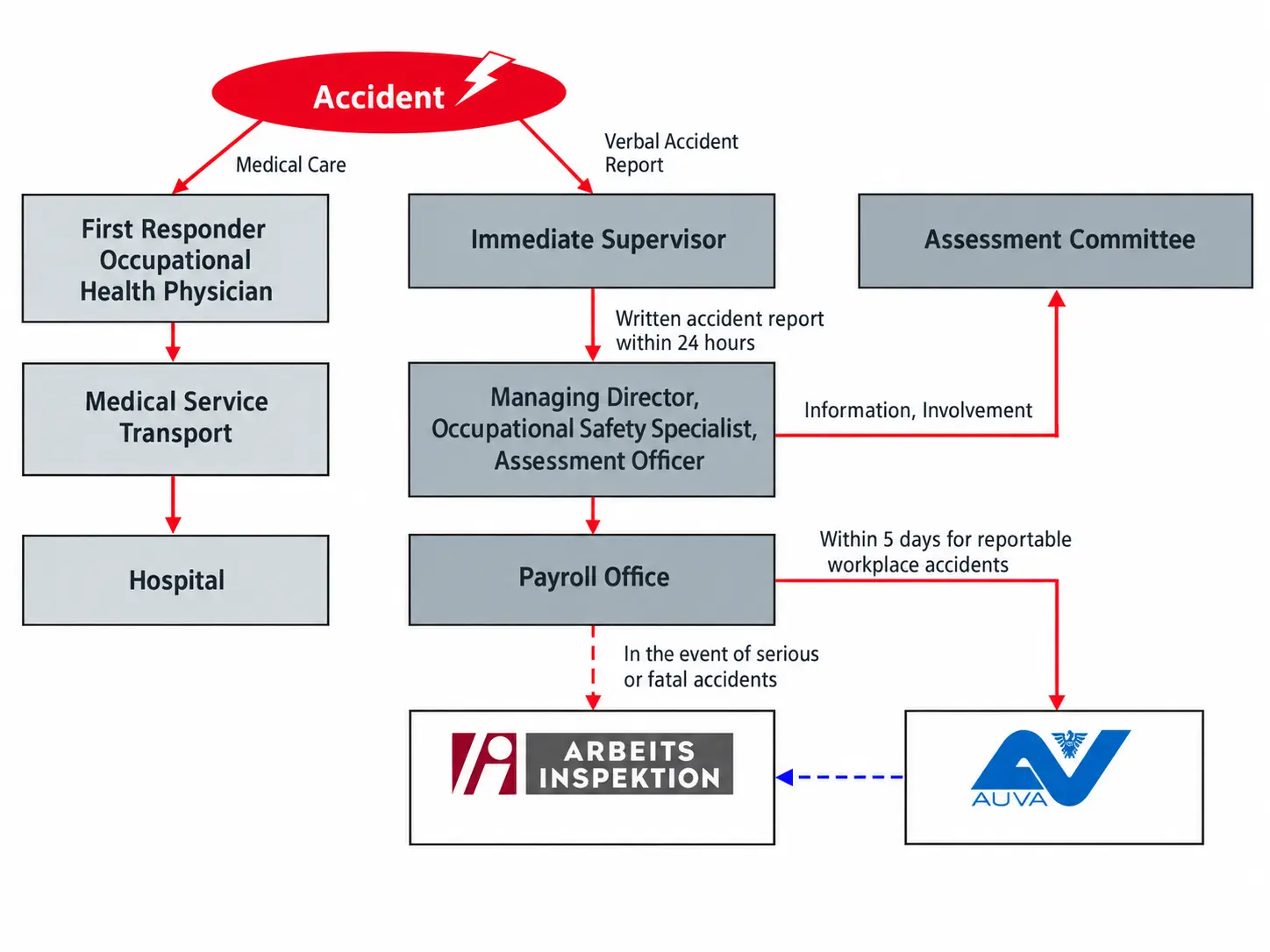
After an accident occurs, the injured person must first receive medical attention and then be taken to hospital by ambulance.
The accident must then be reported internally to the immediate supervisor, who completes a written accident report and forwards it to Executive Management and the Occupational Safety Specialist. The Occupational Safety Specialist or Assessment Officer ensures that the affected workplace is assessed and appropriate corrective measures are initiated. The Occupational Safety Specialist presents a status report at the Assessment Committee meeting.
The accident report is also forwarded to the payroll office, which reports the accident to AUVA and, in the event of serious or fatal accidents, also informs the Labour Inspectorate.
The accident reporting system within the company is structured as follows:
Accident Analysis
Following a workplace accident, an accident analysis or a new workplace assessment focused on the affected area must be carried out and documented in accordance with the “Accident Analysis” process.
Emergency Plans
Emergency plans are available at the companies for foreseeable operational disruptions and emergencies. Through suitable measures and instructions, these plans are intended to ensure that employees act correctly in the event of serious danger or move to a safe place by leaving the workplace immediately.